
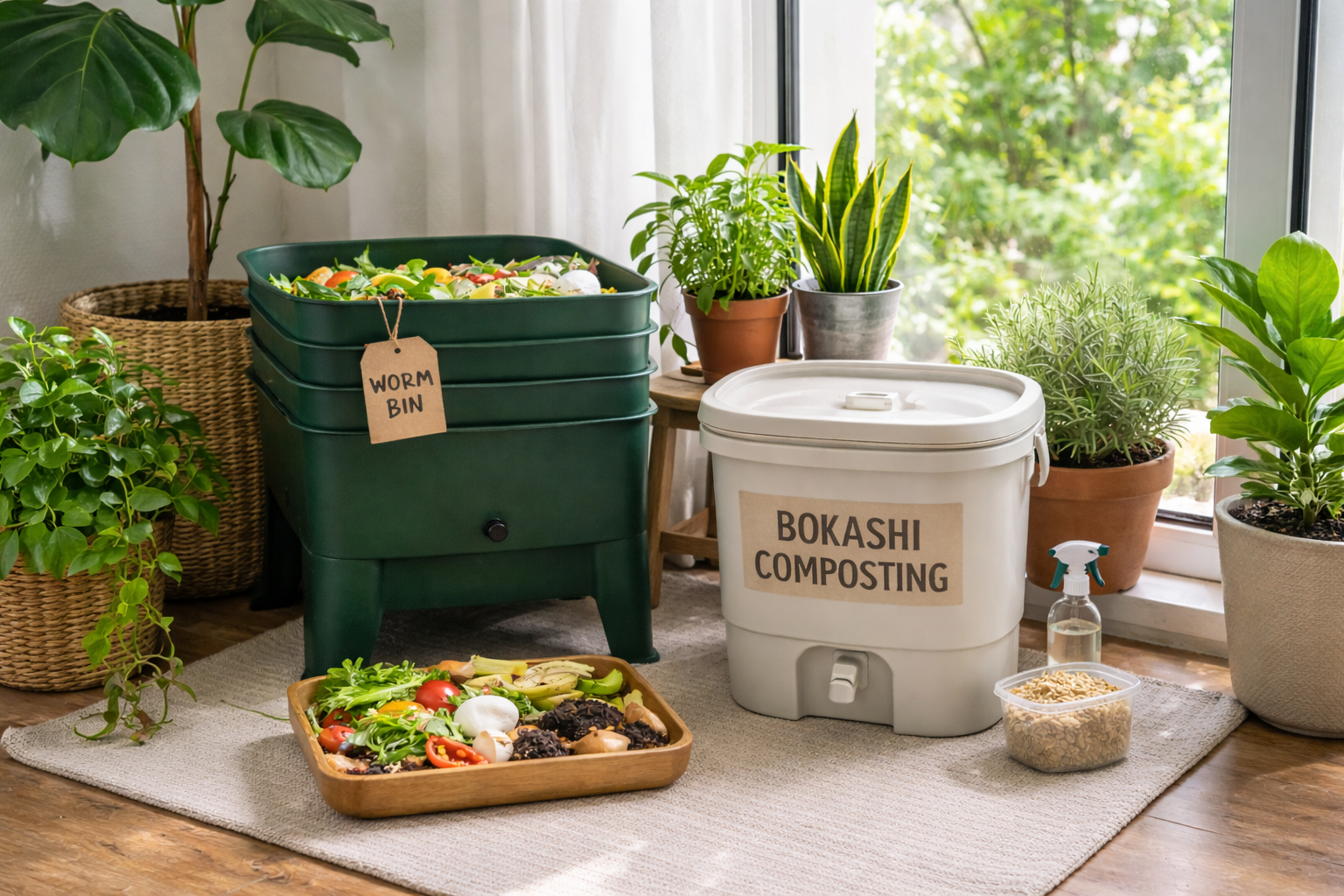
Not everyone has a garden—but that doesn’t mean your food scraps have to go in the trash. If you live in an apartment, a house with no yard, or even a shared space without outdoor access, you can still compost effectively and put those leftovers to good use.
In fact, composting without a garden is becoming more popular thanks to new tools, creative thinking, and community programs.
This guide will show you how to compost, what to do with the finished material, and how to make the most of your efforts—even without soil to dig into.
Why Compost If You Don’t Have a Garden?
At first, it might seem pointless. Why make compost if you don’t have a place to use it?
The answer is simple: composting is about reducing waste, not just gardening. When food scraps go to landfill, they rot in sealed environments, creating methane gas—a major contributor to climate change.
Composting helps return nutrients to the earth. Even if you don’t use the compost personally, someone else can. Whether it’s your neighbor, a local farm, or a community garden, your scraps still have value.
Plus, you’ll probably reduce your trash by 30–50%, which saves money and makes your kitchen feel cleaner.
Best Indoor Composting Methods (No Yard Needed)
You don’t need a backyard to compost—you just need the right system.
Vermicomposting (Worm Composting)
This is one of the best methods for composting indoors. You’ll use red wiggler worms in a small bin to break down your food scraps into “worm castings,” a nutrient-rich compost.
Worm bins are compact, odor-free when balanced, and can fit in a closet, under a sink, or on a balcony. With just a few kitchen scraps a day and regular maintenance, it works beautifully.
The finished compost is especially great for houseplants or small containers.
Bokashi Composting
The Bokashi system ferments food waste using a bran inoculated with microbes. It’s a great solution for people who want to compost everything—including meat, dairy, and cooked foods.
Once the fermentation is done, you need to bury or process the material further. If you don’t have soil, no problem—you can give it away or even freeze it until you do.
The Bokashi method is ideal for small homes and urban apartments, especially when combined with community drop-off options.
Electric Composters
For people who want no mess and fast results, electric composters are the answer. These machines grind and dry food scraps into a soil-like material within hours.
While the output isn’t technically compost (it still needs time to finish breaking down), it’s safe to mix into soil or donate.
This option is more expensive, but it’s hassle-free and works for even the busiest households.
What to Do With the Finished Compost
If you don’t have a garden, what should you do with all that finished compost?
Here are a few great options:
Use It for Houseplants
Even if you have just a few pots around the house, your plants will love the boost. Mix compost with regular potting soil to improve texture and add nutrients.
Just don’t use too much—start with 20–30% compost in the mix and increase as needed.
Share It With Neighbors or Friends
Someone nearby probably gardens. A friend, a family member, or even a coworker might be thrilled to accept some compost for their plants or yard.
It’s a simple act of generosity that builds community and keeps the compost from going to waste.
Donate to Community Gardens or Urban Farms
Many urban areas have gardens that accept compost donations. Some cities even have compost drop-off points at farmers’ markets or recycling centers.
Check online or visit local green spaces to find out who needs compost near you.
Start a Compost Exchange
Some communities have compost exchange programs. You give your food scraps or finished compost, and others give you produce, seedlings, or even homemade goods in return.
Apps and social media groups are a great place to explore this idea.
Create a Balcony or Windowsill Garden
If you have even a little outdoor space, consider starting a small herb garden. Mint, basil, chives, and parsley all grow well in containers and don’t need much room.
Your compost will help these plants thrive—and it feels great to eat something you grew with your own waste.
Tips for Managing Compost Indoors
Without outdoor airflow, you need to be a bit more careful about smells, pests, and moisture. But don’t worry—it’s all manageable.
- Keep a balance of green (wet) and brown (dry) materials
- Cover fresh food scraps with shredded paper or dry leaves
- Never compost meat or dairy unless using Bokashi
- Add a bit of water if it looks dry—or paper if it looks too wet
- Use containers with tight lids to prevent flies or smells
You can also freeze your food scraps during the week and compost them in batches. This helps control odor and gives you time to build a system that works for your schedule.
Building a Community Around Composting
Composting doesn’t have to be a solo mission. In fact, many people find it easier and more fun when they connect with others.
Here’s how to involve your community:
- Ask your building or neighborhood if they’d support a shared compost bin
- Offer to collect scraps from friends or coworkers
- Join or create a composting group on social media
- Partner with local cafés or juice bars—they create tons of organic waste
- Host a composting workshop or share what you’ve learned
When more people compost, everyone benefits. Waste is reduced, gardens flourish, and people feel more connected to the natural cycle of food and soil.
Composting While Traveling
If you travel often, composting might seem hard—but it’s still possible.
You can freeze scraps while you’re away and process them when you return. Or ask a friend to take over your composting temporarily in exchange for using the finished compost.
If you’re using worms, make sure they’re fed before leaving. In well-managed systems, they can go a week or two without issues.
Another option is using a composting service, where someone picks up your food scraps weekly or biweekly—perfect for busy or mobile lifestyles.
Composting Is About More Than Just Soil
Composting without a garden shows that sustainability isn’t limited to people with big yards or perfect setups.
It’s about being conscious of your waste and making an effort to do better, even when space is limited. You don’t need to be a gardener to care about the planet.
Your small actions—like saving a banana peel or building a worm bin—add up to a much larger impact over time.
And who knows? You might inspire someone else to start composting too.
Final Thoughts: You Don’t Need a Garden to Make a Difference
Even without a garden, composting gives your food waste a second life. It keeps organic matter out of landfills, nourishes plants, and connects you to the cycle of life in a hands-on way.
You can compost in a bin, a bucket, or a box under your sink. You can freeze your scraps or share them with your neighbors. What matters is that you choose to do something with what would otherwise be thrown away.
No backyard? No problem. Your impact is still growing.

Alex Carter is a gardening enthusiast and DIY project lover who believes that anyone can grow a greener life with the right tips and a little creativity. At LetyPro, Alex shares practical advice on affordable plant care, hands-on garden projects, and sustainable habits for everyday homes. When not writing, you’ll find Alex experimenting with new planting techniques or repurposing old items into garden decor.